Enhanced Anaerobic Bioremediation
The use of vegetable oil as an electron donor to enhance the reductive dechlorination of chlorinated solvents as an in situ remediation technology is a generally accepted technology. Vegetable oil is a cost-effective slow-release electron donor with a greater hydrogen release efficiency than other electron donors. However, neat vegetable oil can inhibit its own distribution in aquifers as the large oil droplets block the smaller pore throats in an aquifer. This issue has been partially overcome by injecting the vegetable oil as an oil-in-water emulsion. The first emulsions used for bioremediation were created in the field. However, field preparation results in a mixture of droplet sizes, including droplets large enough to block aquifer pore throats. RNAS was the first to manufacture a factory-produced emulsified vegetable oil (EVO) for bioremediation. Our state-of-the-art manufacturing (
US patent No. 6,806,078) produces kinetically stable emulsions with the smallest and most uniform droplet sizes in the industry. Newman Zone
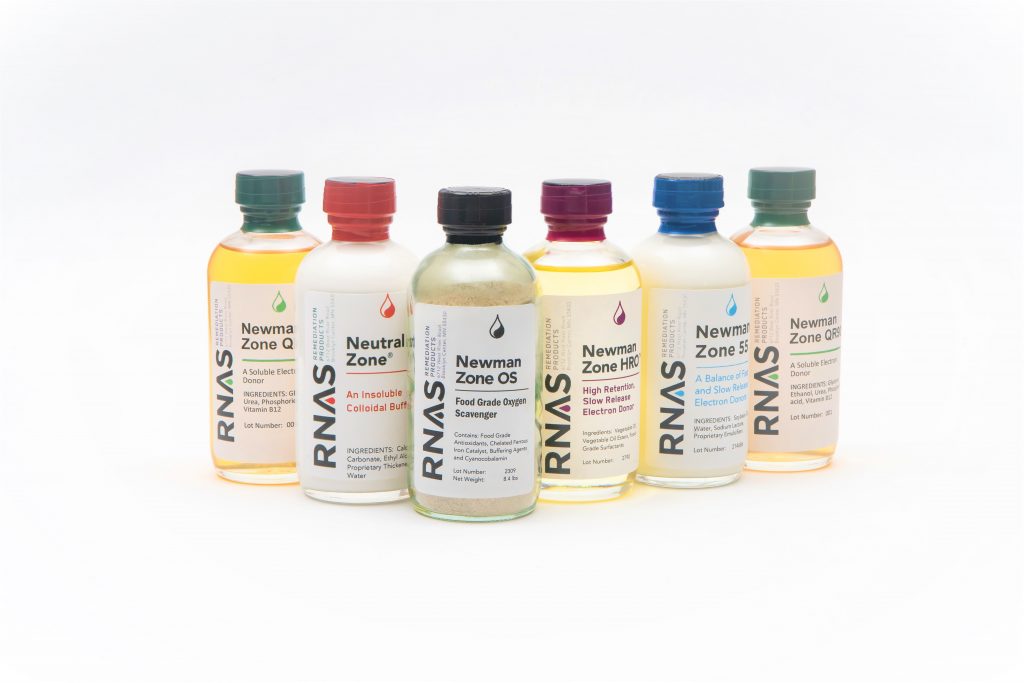
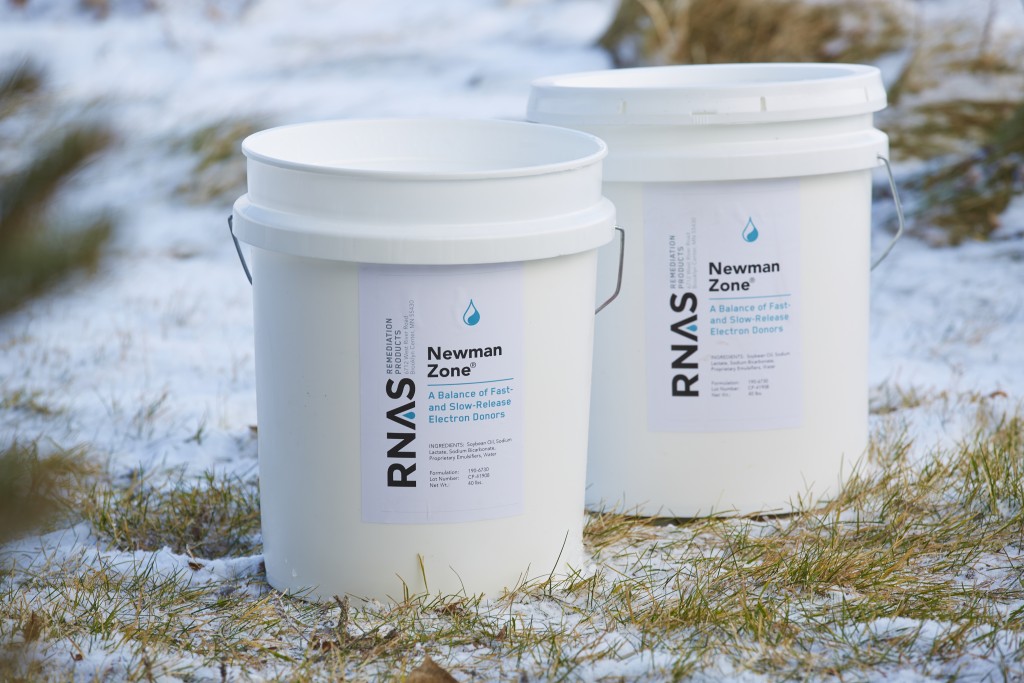
® consists of submicron droplets with less droplet size variation than field-prepared emulsions. It is a blend of fast-release (sodium lactate) and slow-release (soybean oil) electron donors. The emulsion is produced in a stable factory environment where it is pasteurized and packaged in sterile packaging. Newman Zone
® can be used as an electron donor without additional treatments or amendments in the field.